Nvidia announced Project DIGITS in January 2025, priced at $3,000, as a box about 15 cm square. The DGX Spark was originally priced at $3,999 but now the 128 GB model is listed at $6,950, as it has been since 2 October 2026. It has enough GPU-addressable memory for a 120-billion-parameter model on a desk, with 128 GB installed, and the two rivals have the same amount. The Mac Studio M5 Max is the fastest at writing in our estimates. For long prompts, a GB10 box such as the DGX Spark or ASUS Ascent GX10 offers the soonest reply in our estimates. A Ryzen AI Max+ 395 mini PC is the cheapest way in. Dense 70B models are too slow for comfortable use on any of them.
Key takeaways
- These are designed for 120B-class mixture-of-experts models. There is enough room for GPT OSS 120B at Q4_K_M, which needs 70.8 GB, and for context on every box here.
- For chat, the Mac Studio M5 Max would be our choice. On GPT OSS 120B it writes about 40% faster than a GB10 box, by our estimate.
- A GB10 box is the better choice for coding agents and long documents. In public llama.cpp results, it reads prompts about three times as fast as a Ryzen AI Max+ 395.
- In terms of estimated MoE generation speed, the Ryzen boxes are nearly on par with GB10. And the late-2026 price is about half. The disadvantages are slower prompts and more driver work.
- Dense 70B models are slow on all of them. The estimated speeds range from 3 to 9 tok/s.
Three roads to 128 GB
Nvidia's road to this box began at CES. At the end of his keynote, Jensen Huang announced Project DIGITS, a GB10 "personal AI supercomputer", which TechCrunch said would run models of up to 200 billion parameters and cost $3,000 from May. It was five months late and had a different name. On 13 October 2025 Nvidia announced it was shipping, with an early unit delivered by Huang to Elon Musk at Starbase, just as the first DGX-1 had been in 2016. ASUS, Acer, Dell and others have their own GB10 boxes. The ASUS Ascent GX10 uses the same chip and has the same estimates here.
AMD's chip was originally developed for laptops. According to Notebookcheck, AMD used the same CES week to claim "2.2x faster AI performance than the 450 W GeForce RTX 4090 desktop" for the Ryzen AI Max+ 395, calling it the first Copilot+ PC processor to run a 70B model locally. The main difference was memory. A 4090 has 24 GB of memory, and a 70B model at 4-bit needs about twice that. The comparison is more about memory capacity than compute. Mini-PC makers took the same view of the chip. The GMKtec EVO-X2 was released in April 2025. Framework also built a desktop around it.
Apple was already there, as Macs have shared their memory between the GPU and CPU since the M1. The Mac Studio M5 Max went on sale on 22 September 2026 with 614 GB/s of memory bandwidth, more than twice that of either rival.
Two of the three ways to put 128 GB of GPU-addressable memory on a desk
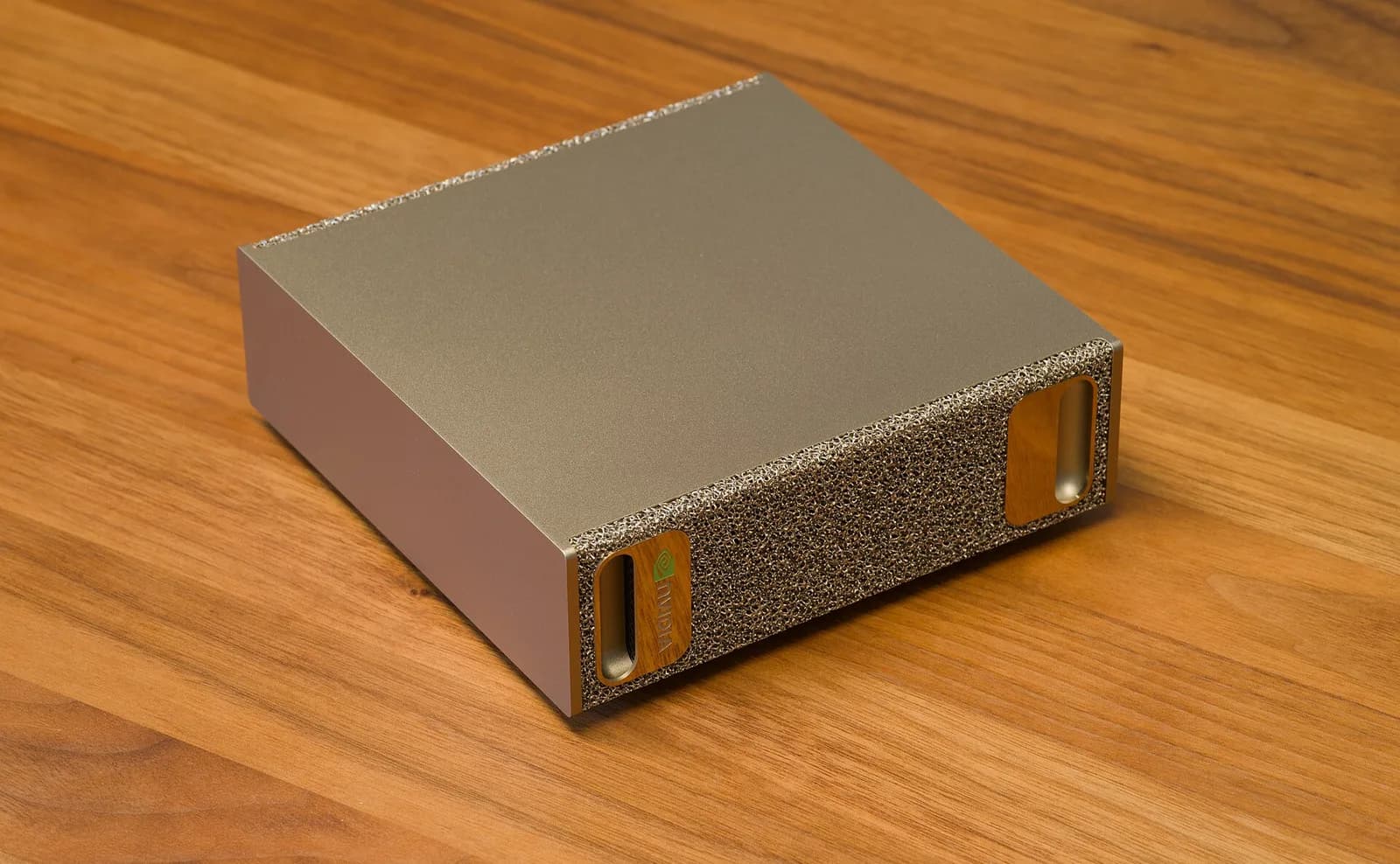
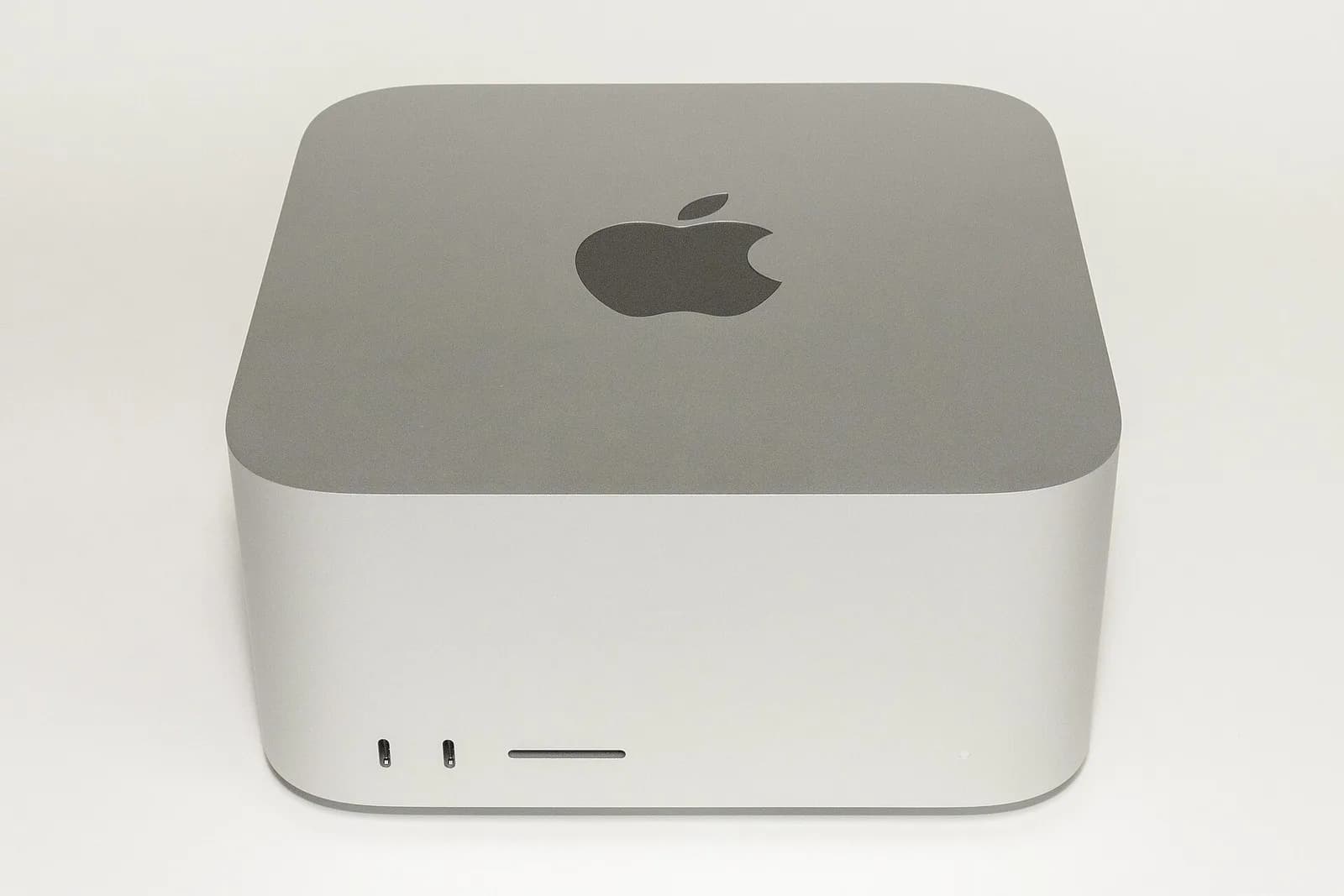
What 128 GB actually holds
The model does not have the full 128 GB available. In our data, a DGX Spark has 120 GB allocatable. On a 128 GB Mac, 124.5 GB is available, with the remainder reserved for the system. For Ryzen AI Max+ 395 boxes on Windows, the maximum GPU memory is 96 GB. Linux allows more. According to one Strix Halo owner's guide, the OS on a Beelink GTR9 Pro has 124 GiB visible.
There is plenty of memory for the intended models. GPT OSS 120B requires 70.8 GB at Q4_K_M, compared with 75.5 GB for Qwen3.5 122B A10B, the highest-scoring model in our catalogue that needs a box this size at 4-bit. Even under the Windows limit, either model has room for a long context.
Dashed line: Ryzen GPU limit, Windows (96 GB at Q4_K_M, 16K context)
- Qwen3.5 122B A10B75.5
- Nemotron 3 Super 120B A12B74.7
- GPT OSS 120B70.8
- Llama 3.3 70B51.3
- Qwen3.8 27B17.9
| Item | GB at Q4_K_M, 16K context |
|---|---|
| Qwen3.5 122B A10B | 75.5 |
| Nemotron 3 Super 120B A12B | 74.7 |
| GPT OSS 120B | 70.8 |
| Llama 3.3 70B | 51.3 |
| Qwen3.8 27B | 17.9 |
The bottom bar is the problem. Qwen3.8 27B has the highest Score at Q4_K_M. It also fits a used 24 GB card, with much faster estimated generation. A 128 GB box makes sense for 120B-class MoE models, several models loaded at once, or 300B models squeezed to 2 or 3 bits. MiMo V2.6 Flash RL fits at IQ2_M. Its Score does not reflect any quality loss from a 2-bit quant, and we make no claim about how much is lost.
How fast a 120B model feels
Our estimates put all three at speeds you can read along with on mixture-of-experts models. Generation speed depends on memory bandwidth, since only a few billion parameters are read for each token in GPT OSS 120B (why MoE models decode faster). The Mac has the most bandwidth.
| Hardware | Memory GB | Bandwidth GB/s | Speed |
|---|---|---|---|
| Mac Studio M5 Max (128 GB) | 124.5 (best) | 614 (best) | 66 (best) |
| Mac Studio M4 Max (128 GB) | 124.5 (best) | 546 | 61 |
| NVIDIA RTX Spark N1X Laptop (128 GB) | 96 | 301 | 51 |
| NVIDIA DGX Spark | 120 | 273 | 46 |
| ASUS Ascent GX10 | 119 | 273 | 46 |
| GMKtec EVO-X2 (Ryzen AI Max+ 395, 128 GB) | 96 | 256 | 41 |
| Framework Desktop (Ryzen AI Max+ 395, 128 GB) | 96 | 256 | 41 |
- GB · higher is better
- GB/s · higher is better
The slowest box is still quick. Adults read non-fiction at about 238 words a minute, or roughly four words a second. A Ryzen box prints text several times faster than that at an estimated 41 tok/s.
Results published by owners were a little higher than our estimates, with the boxes in the same order. llama.cpp's own DGX Spark benchmark gives 58.7 tok/s for GPT OSS 120B, compared with 55.6 tok/s logged on the Beelink in the Strix Halo guide in May 2026. Those results used the model's native MXFP4 file, which is smaller than the Q4_K_M used for our estimates. A higher speed is therefore to be expected.
The main difference is in dense models. These need every weight to be read for every token, and the Mac's greater bandwidth gives it an estimated speed advantage of two and a half to nearly three times.
- Qwen3.8 27B
- Llama 3.3 70B
Mac Studio M5 Max
Qwen3.8 27B24.7Llama 3.3 70B9.2Mac Studio M4 Max
Qwen3.8 27B21.9Llama 3.3 70B8.2RTX Spark N1X laptop
Qwen3.8 27B11.2Llama 3.3 70B4.2DGX Spark / ASUS Ascent GX10
Qwen3.8 27B10.2Llama 3.3 70B3.8Ryzen AI Max+ 395 boxes
Qwen3.8 27B8.8Llama 3.3 70B3.3
| Item | Qwen3.8 27B | Llama 3.3 70B |
|---|---|---|
| Mac Studio M5 Max | 24.7 | 9.2 |
| Mac Studio M4 Max | 21.9 | 8.2 |
| RTX Spark N1X laptop | 11.2 | 4.2 |
| DGX Spark / ASUS Ascent GX10 | 10.2 | 3.8 |
| Ryzen AI Max+ 395 boxes | 8.8 | 3.3 |
The 70B column deserves a look before choosing a box for it. A Ryzen box has an estimated speed of 3.3 tok/s on Llama 3.3 70B, slower than you read, and even the Mac is estimated to stay under 10. A Level1Techs thread on Strix Halo has similar reports, with dense 27B models at "6-9 tok/s at full context regardless of backend".
The wait before the first word
Before starting a reply, the box must read all of the input. This is called prefill, and its dependence on compute is where the GB10 chip justifies its price. The difference is barely noticeable in a chat. With a codebase pasted into an agent, however, it is noticeable.
- DGX Spark / ASUS Ascent GX10 / RTX Spark0.84
- Mac Studio M5 Max3.46
- Mac Studio M4 Max6.85
- Ryzen AI Max+ 395 boxes7.21
| Item | seconds to first token, 4,096-token prompt, GPT OSS 120B Q4_K_M, estimated |
|---|---|
| DGX Spark / ASUS Ascent GX10 / RTX Spark | 0.84 |
| Mac Studio M5 Max | 3.46 |
| Mac Studio M4 Max | 6.85 |
| Ryzen AI Max+ 395 boxes | 7.21 |
The public results differ from our estimates here, and the reader should know by how much. In llama.cpp's DGX Spark benchmark, a GPT OSS 120B prompt is read at about 2,400 tokens a second, half our estimated figure, putting a 4,096-token prompt nearer 1.7 seconds. The Beelink measured in the Strix Halo guide was about a quarter faster than our estimate. The measured GB10 prompt speed is about three times that of a Ryzen box, compared with more than eight in our estimates. The order is the same either way. We would give more weight to the measured gap.
Long prompts make the gap hurt. The Strix Halo guide logged 478 tokens a second on a 32,768-token prompt, with more than a minute to the first word. At each step, a coding agent can resend that much context.
The M5 Max owes its place to the neural accelerators Apple added to the M5's GPU cores. On the base M5 in MLX, Apple's machine-learning team measured “up to [four times] speedup compared to a M4 baseline for time-to-first-token”. The estimated prompt speed of the M5 Max is about twice that of the M4 Max, though still well behind GB10.
Living with each box
The DGX Spark is a machine running Nvidia's Ubuntu-based DGX OS on an Arm CPU, with CUDA support for tools written for Nvidia cards. Early reports of performance under load were mixed. LMSYS saw no throttling in an early unit in October 2025, calling it "remarkable for a workstation that sits quietly on a desk". Two weeks later, John Carmack reported a ceiling near 100 W and “about half the quoted performance” from his unit; Tom's Hardware covered his post and forum complaints of crashes and shutdowns. Which of the two is typical now, we can't say.
With the Ryzen boxes, you will need more patience. For the Ryzen AI Max+ 395, ROCm is supported on Linux only, according to Ollama's GPU documentation; on Windows the route is Vulkan. On Linux, the behaviour differs between the two backends. The owner who started the Level1Techs thread found "Vulkan is way more stable at full context", while ROCm 7.2.2 "could see the GPU but couldn't compile shaders" on this chip. For the setups AMD documents, see our AMD and Intel guide.
Of the three, the Mac is the easiest to set up. Models can be run using Metal in llama.cpp-based apps or Apple's MLX. No choice of drivers is needed. The platform is closed and has no CUDA, however.
GB10-class silicon is also available in Windows laptops from Nvidia. The RTX Spark N1X has up to 96 GB for the GPU and the same prompt speed in our estimates. We calculate its 300.8 GB/s from LPDDR5X-9400 on a 256-bit bus. The 45 to 80 W power limit, compared with 140 W on the DGX Spark, will result in lower sustained speeds.
Boxes made of memory, in a memory shortage
LPDDR5X makes up most of the cost of these boxes, and it rose in price through 2026. Nvidia raised the DGX Spark from $3,999 to $4,699 in February, citing "worldwide constraints in memory supply", and then to $6,950 on 2 October, according to Hardware Busters.
Prices also rose for the cheaper boxes. In January, Framework raised the price of its 128 GB Desktop from $1,999 to $2,459. "The prices of 128Gbit parts (of which we use eight to get to 128GB) have spiked the most," Patel told PCWorld. A 128 GB EVO-X2 now costs about $3,500, according to Notebookcheck.
- Launch
- Late 2026
DGX Spark
Launch3,999Late 20266,950Framework Desktop 128 GB
Launch1,999Late 20263,449GMKtec EVO-X2 128 GB
Launch1,799Late 20263,499
| Item | Launch | Late 2026 |
|---|---|---|
| DGX Spark | 3,999 | 6,950 |
| Framework Desktop 128 GB | 1,999 | 3,449 |
| GMKtec EVO-X2 128 GB | 1,799 | 3,499 |
The price order is unchanged. At these prices, the cost per estimated token a second on GPT OSS 120B for a Ryzen box is a little over half that of a DGX Spark. The 128 GB option for the Mac Studio M5 Max costs $2,000 to add, while Macworld's review unit with 128 GB and a 4 TB drive cost $6,899, about the current price of a DGX Spark. Since 23 October, Nvidia's partners have also offered 64 GB GB10 boxes from $4,999, but these do not have enough memory for GPT OSS 120B at Q4_K_M.
Who each box is for
Your choice depends on how you spend the waiting time. For chat with big MoE models, the Mac would be the best choice for its fastest estimated writing speed and the least setup. If you feed agents long prompts all day, only the GB10 boxes keep up. The Ryzen boxes are the cheapest way to have 120B at home on Linux, at about half the price of a Spark.
Verdict
Which to choose
In short, the Mac writes fastest, the GB10 boxes read prompts fastest and the Ryzen boxes cost least.
Good for
- For chat with 120B-class MoE models: Mac Studio M5 Max 128 GB
- DGX Spark or ASUS Ascent GX10 (the same GB10 chip) for coding agents and long documents
- For 120B at home at the lowest cost on Linux: a Ryzen AI Max+ 395 mini PC
Not for
- Anyone who wants dense 70B models at reading speed: our estimates are 3.3 to 9.2 tok/s on these boxes
- Anyone whose models fit a 24 to 32 GB GPU: a graphics card is estimated to run them several times faster
- Anyone who wants to add memory later: the memory is soldered on every box here